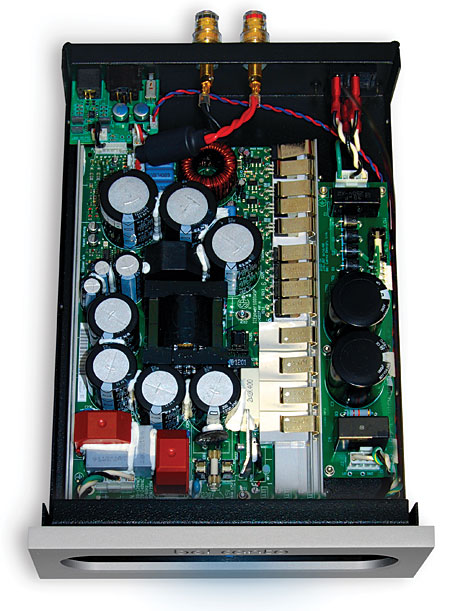
Mätningarna du redovisade är i koppling till testet i Sterophile, där de skriver så här om just denna produkten (Bel Canto):
Conclusion
How much of an improvement is the Mk.II over the original Ref1000? In some ways, it's only incremental—both models sound clean, powerful, and neutral. On the other hand, these incremental improvements move the Mk.II beyond the category of "really good for a digital amp" to just plain "really good." The Bel Canto Ref1000 Mk.II can be compared with the cream of the other amps I've had in my system: the Classé CA-3200, Mark Levinson No.433, and Ayre Acoustics V-6xe. Each of these distinguishes itself in different ways, and particularly with different speakers. Because of this, I think I must keep the Bel Canto Ref1000 Mk.IIs as a reference amplifier—an easy decision even when based solely on its sound, but also: in my living room, none of the others can be so easily hidden in plain sight.
De vill ha den som referensförstärkare....
Så det är det jag säger, "problemet" med den distorsion du ser i mätningarna är inget som har praktisk betydelse, det låter jättebra ändå.
Sen i de senare varianterna av ClassD (och ICE Power modulerna/tekniken) så har man minskat "problemet". Den ökade distorsionen uppstår endast då förstärkaren utsätts för extrem belasning, dvs drivs med låga impedanser och hög uteffekt. Och då stiger distorsionen endast i det övre frekvensregistret (18-20 KHz mest) från de normala 0.003% till ca 0.1-0.2% dist. Iof en markant ökning men inget som har någon praktisk betydelse, dvs man hör det inte.