Moderator: Redaktörer
Systemdek skrev:Nej ESR ska ju vara låg också.
men vet inte hur dana Quads orginaler är osäker på vad det var för fabrikat.
xeizo skrev:Det är inte bara storleken som räknas ... Nätkondingar bör vara hyfsat snabba också, det är avvägningar som behöver göras så riktigt så enkelt som att välja större är det inte ...
RogerGustavsson skrev:xeizo skrev:Det är inte bara storleken som räknas ... Nätkondingar bör vara hyfsat snabba också, det är avvägningar som behöver göras så riktigt så enkelt som att välja större är det inte ...
Vad är en snabb kondensator? Framförallt då den sitter som glättning?
xeizo skrev:Bla därför man ibland ser lösningar med ett batteri av mindre kondingar istället för två stora, finns även andra fördelar med det, men också nackdelar. En sund konstruktion är en balans av för- och nackdelar.
You see, filter capacitors should be just that, FILTER capacitors, their energy storage function being of secondary importance. In many commercial units, these roles are present but reversed - larger value capacitors are used not only for filtering, which they cannot help but do, but also to act as energy reservoirs.
Of course, they always act that way, but the point is that they tend to be increased in capacity to cover for inadequate power transformer size and/or performance.
In such cases, you are not very likely to find high quality capacitors inside, but rather those of commercial quality. There are two basic reasons for this. The first is that they are cheap, and can be made to look good on ad photos and in ad sales blurb.
The second is that by connecting two capacitors in parallel, one not only doubles their energy reserves, but also cuts their output impedance in half. This is of course quite true, and in practice works every time without fail, but in essence is much less than we are led to believe.
So halved output impedance may still be above the values obtainable by using a single pair of high quality capacitors. Also, this view completely disregards capacitor charge and discharge speeds - good quality caps are expensive precisely because they are, among other things, very fast.
By way of example, a typical commercial value capacitor, rated at 10,000uF/63V and costing some Euro 8-9, will have a speed of 30-40V/uS at best. An equivalent Elna for Audio series black, costing some Euro 15-25, will have a speed in the range of 80-90V/uS, i.e. at the very worst, double the speed of the best case in commercial cap land. A Siemens Sikorel cap, costing some Euro 20-30, will slew at over 100V/uS - but at a price.
And this is hard to ignore if you want good quality sound. What's the use of ultra fast electronics, capable of tremendous speeds, if they will be bogged down by slow capacitors, which will appear as speed limiters? I can't help being sarcastic here - this is why in so many cases the advertised amp speed is never achieved in real life.
Many manufacturers measure the speed of the input stage only, and far too few of the overall amplifier - the second group will always show much less impressive results. So beware of wild figures, they are most probably not truly representative of the amp as a whole, on an input-to-output basis.

rikkitikkitavi skrev:Jag har simulerat det där i LTSpice och egentligen spelar inte kondensatorns storlek så stor roll för vilken RMS ström man får i sekundären.
En mindre konding får större rippelspänning, vilket driver strömspikarna uppåt men å andra sidan laddas den snabbare upp igen.
En större konding får lägre rippelspänning, men tar längre tid att laddas upp igen.
Skillnaden är < 10%.
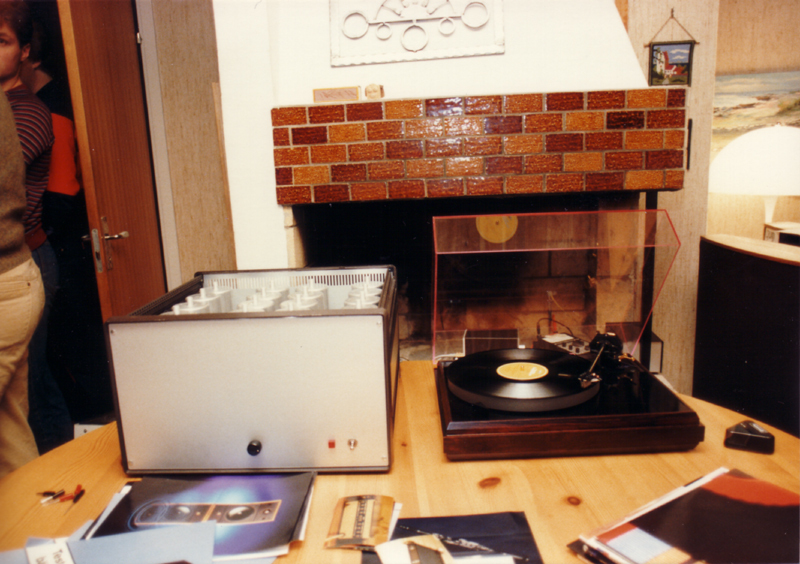
RogerGustavsson skrev:Svalander hade möjligen lite större kondensatorbanker förr i tiden? Till vänster i bild är ett försteg....
Användare som besöker denna kategori: sammel och 25 gäster